For the past two years, I've been working on this playlist I'm calling "Anthems From the Collective." It's a playlist filled with songs that other people (the collective) can't let go or keep coming back to in some way because they're meaningful or powerful on a level you can't always explain.
I got the idea after a summer camp, when at a circle ceremony a youth sang along to Carolina Liar's "Beautiful World" playing through an iPod. And the way he moved, you could tell the song resonated with him.
So far as I know this was a first time anyone had done anything quite like that in a Heart Circle ceremony. Usually people just sing a song or have the group sing for them.
Well this got me thinking, as unusual events are wont to do, about my own music. What songs resonate with me in that way?
I actually came up with two for very different reasons: "Mr. Tinman" by a local college band, Lamppost Revival, and "Sunrise" by Norah Jones. The first called to me even before I new anything about it. I had an English class with the lead singer and we became Facebook friends, and one day he posted a link to a music video:
I knew I was hooked. To me this song is feeling lost and inbetween, but still going forward. It shook me and for reasons I can't explain in words became an instant favorite.
"Sunrise" has always been my morning song, my rainy day song, my you need something to calm yourself down song. It's the song that I subconsciously start singing when I'm having a day that feels particularly deep.
So I collected these three songs, and started a playlist. I started asking other people the same question I'm asking you now: What songs resonate with you?
Showing posts with label music. Show all posts
Showing posts with label music. Show all posts
Friday, October 19, 2012

Tuesday, July 17, 2012
That one time I had a song written about me.
Spring Quarter 2010 Sophomore Year of College
The quality was crap, recorded with a webcam on a shitty computer. But despite that, it was beautiful and powerful. It bit more low key and folksy single-man-with-guitar than the original.
Three minutes fourteen seconds about me dancing.
In a later email he told me how I was one of the only friends he'd made in college, which I found sad and beautiful at the same time.
He was kind of tall. Almost gangly, but you wouldn't know it for the way he stooped and hid behind the shyness of his voice. We'd had a class together the previous quarter, Parasites, but nobody knew he was there. He was a guest with a host, a ghost.
Maybe three of us in the entire class noticed him in the back corner. Even for the online assignments on a social networking site called plurk, he was scarce. His posts, few and far between as they were, were regularly and systematically erased because the most successful parasite (or houseguest) leaves its host with no traces that it was there.
I was drawn to him. I could feel the red thread of fate unraveling the slack necessary to pull us together.
So I crossed the gap. I read and commented on his posts. I made eye contact as direct eye contact as I could when he walked past. I invited him to share a meal with me.
I suppose it helped that at the time he was hopelessly infatuated with one of the two other people in class who'd taken the time and energy to notice him, my friend Kai. We went together to watch her perform at the Naked Truth on Stereotypes.
We got to know each other. We became friends.
When he graduated after winter quarter, I stopped seeing him as much. He was still in town but lived far beyond even my walking prowess. Still, we kept in touch; exchanging emails and continuing an impossibly long conversation thread on plurk.
Late in March, he sent me an mp3 file via email. There was no caption, no commentary. The only way it related to the conversation we'd been having was that at the time I had just started an Independent Study Project (blogged about and mostly contained here) on a postmodern examination of music and society. Just 912 kilobytes, the song was a cover of "Holland, 1945" by Neutral Milk Hotel.
"So I ate beside [Teddy] today. He's a quiet, awkward soul and underestimates the power he has within himself. I'm so drawn to that. He offered to teach me guitar, but then immediately said he wasn't very good. I asked, and he's played for 10 years." - Excerpt from personal journal, March 10, 2010
I suppose it helped that at the time he was hopelessly infatuated with one of the two other people in class who'd taken the time and energy to notice him, my friend Kai. We went together to watch her perform at the Naked Truth on Stereotypes.
We got to know each other. We became friends.
When he graduated after winter quarter, I stopped seeing him as much. He was still in town but lived far beyond even my walking prowess. Still, we kept in touch; exchanging emails and continuing an impossibly long conversation thread on plurk.
Late in March, he sent me an mp3 file via email. There was no caption, no commentary. The only way it related to the conversation we'd been having was that at the time I had just started an Independent Study Project (blogged about and mostly contained here) on a postmodern examination of music and society. Just 912 kilobytes, the song was a cover of "Holland, 1945" by Neutral Milk Hotel.
The quality was crap, recorded with a webcam on a shitty computer. But despite that, it was beautiful and powerful. It bit more low key and folksy single-man-with-guitar than the original.
"You have a completely different kind of energy when you're singing than you do talking in person. The closest I can think of to describe it is to compare it to the feeling I get when I'm dancing. Everything else drops away. There's just me and the music and - and it's like making love, by which I mean creating love. I dunno, it's not really something you can put into words. If you have any other music recorded and feel so willing, I would love to hear it." -Excerpt from personal correspondence March 22, 2010This was soon followed by two songs he'd written for past loves, a cover of Daniel Johnston and a song he wrote for/about me.
Three minutes fourteen seconds about me dancing.
Danny you dance all through the room.The lyrics are so simple and drawn out so much in the song. I listen to this, and I want to live up to it. I want to be that beautiful by forgetting about the world for just a few minutes and dancing.
Danny you dance like nobody's looking at you
And it's beautiful. And it's beautiful.
And it's beautiful.
Danny your hands move where you want them to
Danny you know this what all of us want to do
Because it's beautiful. Because it's beautiful.
Because it's beautiful.
Though it's beautiful.
Though it's beautiful.
It's beautiful.
In a later email he told me how I was one of the only friends he'd made in college, which I found sad and beautiful at the same time.
***
We still talk occasionally. Exchanging emails and catching up. About two months ago, I joined him in partaking of conveyor sushi with his girlfriend. We don't talk as often as we should and if he got that job in Portland is now quite a bit less easier for me to find than when he was in Bellingham.
At the idea of him writing a song about me I'm touched and a mite flabbergasted. It seems... strange somehow to realize yourself as a muse, as inspiration, the uncanny feeling of a writer being written about.
You can listen to the song on my tumblr: http://acelessthan3.tumblr.com/post/27448822390
You can listen to the song on my tumblr: http://acelessthan3.tumblr.com/post/27448822390
Monday, August 22, 2011
Anthems from the Collective
Anthem n. A song with rousing, emotive, qualities, often one identified with a particular subculture, social group, or cause.
So over the last month or two I've been putting together a playlist I'm calling "Anthems from the Collective." But being that I'm only one young man, I'm kind of limited on the number of contributions I can make and be able to call this a collective endeavor. This, dear reader, is where you can be of service to me.
Do you have any songs that speak to you no matter your mood, no matter where you are or who you're with? Songs that scream and dance and hit you over the head saying, "Hey, you with the ears, we should do this together"? Send them to me so I can add your anthem to the collective.
So over the last month or two I've been putting together a playlist I'm calling "Anthems from the Collective." But being that I'm only one young man, I'm kind of limited on the number of contributions I can make and be able to call this a collective endeavor. This, dear reader, is where you can be of service to me.
Do you have any songs that speak to you no matter your mood, no matter where you are or who you're with? Songs that scream and dance and hit you over the head saying, "Hey, you with the ears, we should do this together"? Send them to me so I can add your anthem to the collective.
Monday, November 29, 2010
Breaking out of my shell

I've decided that for the duration of fall quarter (or what remains of it anyways) and for winter quarter, I am instating campus as a no-headphone-zone for myself. Everywhere from the Fairhaven dorms to Nash-Higginson during class hours is off limits for mp3 listening.
I'll admit that it's nice every once in a while to float through the world, existing in a sound-proofed bubble of untouchability. People see the dangling cords and are hesitant to interrupt. There's a power in your step as you walk to the beat of someone else's drum.
But aren't we supposed to have a song in our own heart, march to the beat of our own drum? Be original and blah blah blah.
So I say this to all you people on the Western Washington University campus, I'm pulling out the earbuds, I'm walking (and because it's me, dancing) to my classes sans-music and I'm going to look you in the eye as I walk past you. I'm going to smile. I'm going to nod. If I know your name I will say it. Hell, I might even stop and chat.
I'm grounding myself in you, offering my presence undistracted by the media mindwipe.
I'm not asking you to do the same.
I'm asking that you look back.
Wednesday, May 19, 2010
Rhythm and the Wheel
I'm tired of working on this post. It's been a work in progress for a month now and it's about time it got out there for the world to see.
Western culture through its influence by many Eastern traditions believes in the image of a wheel of time or wheel of history. Time is cyclical and works in great circles, sine and cosine values of life and death. The wheel of time in such a context is the story of history.
This idea of the cycle, the wave and the circle, has consequences because it encompasses and includes its own alterity. For every up, there is a corresponding down.
Everything moves in cycles. There are the great cycles, the astrological and the minute, the mundane shift from day to night and back again. Even the simple repetition of a heartbeat echoes the waveforms of life.
In that we keep time in music, that we must repeat these cycles of rhythm and form to maintain the music, music reflects that selfsame story of history, and indeed music as a reflection of culture and style shows us history. Music then is one of the closest physical manifestations to this kind of cyclical movement to be found in day to day life.
We can conceptualize and interpret music in a way that we cannot when looking at other aspects life, but through analogy, we can assign meaning to music that allows us by association to explore these other areas. Music then is a reflector and an interrupter of our normal rhythms.
Anything worth doing is worth doing again. Any song worth listening to is worth listening to again.
As we progress forward through history though, we find an interesting evolution in music. It changes form and storage. Originally it was mental. You memorized a song to perform it, it did not exist physically. Then it got written down and on paper took the rectangular shape.
It is in this form that we find music has the longest recorded history. And even then it had to be filtered somehow to be produced. Either a mechanical like a player piano that could clip-blip it's way around a metallic form, or a musician to interpret and perform the music.
We find what Attali in his Noise: The Political Economy of Music describes as the beginning of repetition versus production. You could mass produce the simulacrum of music that was the written form as we represent sounds with notes on a line.
 With the creation of the of the phonograph and the record, we find the ability to directly record music as sound itself. And what I find interesting, especially in the context of this post is how the recordings of this storage took on the rounded shape, similar to that of a wheel.
The repetition vs production differentiation then became exponential in that the middle-man, the performer, got cut out after the initial "printing." As we move towards the digital age, we find that an increase in quality of recording as we shift from the record to the cassette to the CD, all of which retain this wheel-like appearance.

But then we come to the mp3, the fully digital format. And enter a realm of alterity. How do you conceptualize an mp3 and visualize it? We can't. The repetition has come full circle to the production in that once again it's intangible.
But what does it mean to be intangible? Is it a ghost? It is not human. It is not physical and I see no way in which we could anthropomorphize it.
It moves us with its alterity. It moves us in circles.
 |
| The celestial cycle |
Western culture through its influence by many Eastern traditions believes in the image of a wheel of time or wheel of history. Time is cyclical and works in great circles, sine and cosine values of life and death. The wheel of time in such a context is the story of history.
This idea of the cycle, the wave and the circle, has consequences because it encompasses and includes its own alterity. For every up, there is a corresponding down.
Everything moves in cycles. There are the great cycles, the astrological and the minute, the mundane shift from day to night and back again. Even the simple repetition of a heartbeat echoes the waveforms of life.
In that we keep time in music, that we must repeat these cycles of rhythm and form to maintain the music, music reflects that selfsame story of history, and indeed music as a reflection of culture and style shows us history. Music then is one of the closest physical manifestations to this kind of cyclical movement to be found in day to day life.
We can conceptualize and interpret music in a way that we cannot when looking at other aspects life, but through analogy, we can assign meaning to music that allows us by association to explore these other areas. Music then is a reflector and an interrupter of our normal rhythms.
Anything worth doing is worth doing again. Any song worth listening to is worth listening to again.
As we progress forward through history though, we find an interesting evolution in music. It changes form and storage. Originally it was mental. You memorized a song to perform it, it did not exist physically. Then it got written down and on paper took the rectangular shape.
It is in this form that we find music has the longest recorded history. And even then it had to be filtered somehow to be produced. Either a mechanical like a player piano that could clip-blip it's way around a metallic form, or a musician to interpret and perform the music.
We find what Attali in his Noise: The Political Economy of Music describes as the beginning of repetition versus production. You could mass produce the simulacrum of music that was the written form as we represent sounds with notes on a line.
 With the creation of the of the phonograph and the record, we find the ability to directly record music as sound itself. And what I find interesting, especially in the context of this post is how the recordings of this storage took on the rounded shape, similar to that of a wheel.
The repetition vs production differentiation then became exponential in that the middle-man, the performer, got cut out after the initial "printing." As we move towards the digital age, we find that an increase in quality of recording as we shift from the record to the cassette to the CD, all of which retain this wheel-like appearance.

But then we come to the mp3, the fully digital format. And enter a realm of alterity. How do you conceptualize an mp3 and visualize it? We can't. The repetition has come full circle to the production in that once again it's intangible.
But what does it mean to be intangible? Is it a ghost? It is not human. It is not physical and I see no way in which we could anthropomorphize it.
It moves us with its alterity. It moves us in circles.
Sunday, May 9, 2010
Song and Silence
Sometimes when I dance, the world goes silent. All that exists is my body and the movement. There are no words, no thoughts, it's a trance-like state and I find that I'm at peace. I'm experiencing the moment not as me, not as a thinking being, but as a nothing. I'm invisible to myself and to the world.
And then I pause and everything comes crashing back. I'm filled with sound, with thought. My reprieve from the world is intruded upon and interrupted.
People spend hours at a time meditating to experience that relief, seeking that cessation of noise, immunity from the infection that Burroughs called Word. In those quiet moments, the inner monologue is absent.
It's rare and takes practice, and for this to occur naturally often requires some kind of interruption upon the interruption, an overriding noise to replace that which has become the background of our existence.
I'm reminded of this because of my experience at HigFOM (the Higginson Festival of Music) this weekend.

What happens when music overpowers lyrics, when what we hear no longer has Word operating within it? Is there still meaning and by that I mean the kind of subjective meaning we use to describe the thoughts and emotions and words used in our day to day existence?
For example, one of the bands at HigFOM, Mission Orange, introduced one of their songs as being about "hiking on Mount Baker" or something to that effect, but when they started playing, the drums and guitar and feedback completely covered up and drowned out any vocals that would have conveyed that message.
You couldn't hear what he was singing at all and it seemed ironic to preface the song with a description. If I'd come across this on the radio, I don't think I would have been able to discern anything relating to being on a mountain.

In other words, the intent is there, but the meaning is lost amongst the sound accompanying it. It interrupts the transmission of the message. And this interruption provides us with silence of the mind.
And I got lost in the song, pulled in and whirled around by a maelstrom of sound. Soon I found that if I let this continue, it tore away at my mind. There was only the music.
Here then is an example of music as a release, as an agent of the momentary nirvana that teases us with a glimpse of bliss, for music in this capacity gives us silence.
But there is also danger in this. As much as it can be a tool for empowerment and enlightenment, the way we envision a monk or other Eastern practitioner reducing thought and expanding mind, applied differently, this ability of music becomes a tool in the power of economy of the mind.
In emptying the mind, it is made vulnerable. Is not the blank sheet easiest to fill?
And then I pause and everything comes crashing back. I'm filled with sound, with thought. My reprieve from the world is intruded upon and interrupted.
People spend hours at a time meditating to experience that relief, seeking that cessation of noise, immunity from the infection that Burroughs called Word. In those quiet moments, the inner monologue is absent.
It's rare and takes practice, and for this to occur naturally often requires some kind of interruption upon the interruption, an overriding noise to replace that which has become the background of our existence.
I'm reminded of this because of my experience at HigFOM (the Higginson Festival of Music) this weekend.

What happens when music overpowers lyrics, when what we hear no longer has Word operating within it? Is there still meaning and by that I mean the kind of subjective meaning we use to describe the thoughts and emotions and words used in our day to day existence?
For example, one of the bands at HigFOM, Mission Orange, introduced one of their songs as being about "hiking on Mount Baker" or something to that effect, but when they started playing, the drums and guitar and feedback completely covered up and drowned out any vocals that would have conveyed that message.
You couldn't hear what he was singing at all and it seemed ironic to preface the song with a description. If I'd come across this on the radio, I don't think I would have been able to discern anything relating to being on a mountain.

In other words, the intent is there, but the meaning is lost amongst the sound accompanying it. It interrupts the transmission of the message. And this interruption provides us with silence of the mind.
And I got lost in the song, pulled in and whirled around by a maelstrom of sound. Soon I found that if I let this continue, it tore away at my mind. There was only the music.
Here then is an example of music as a release, as an agent of the momentary nirvana that teases us with a glimpse of bliss, for music in this capacity gives us silence.
But there is also danger in this. As much as it can be a tool for empowerment and enlightenment, the way we envision a monk or other Eastern practitioner reducing thought and expanding mind, applied differently, this ability of music becomes a tool in the power of economy of the mind.
In emptying the mind, it is made vulnerable. Is not the blank sheet easiest to fill?
Tuesday, May 4, 2010
Musicality
Music is namaste manifest, despite traditional and originary meanings, it has become accepted to represent a sentiment akin to the light in my heart recognizing and respecting the light in your heart.
Sing the song of your soul. March to the beat of your own drum. To exist and, more importantly, to create in this world is to let that musicality express itself.
Music culture is a reflection of soul culture. If a song resonates with you, you feel it. You dig it, and so feel it beneath the surface. Music is the sound that is noise with purpose with an added layer of rhythm.
And the beauty of it is that it has an organic quality. Good music flows, it comes naturally to us and good music that doesn't flow does so that it interrupts this process in such a way that that makes it natural to the process.
If we take noises to be the basic building blocks, the random nucleotides in this aural (and in many ways sub-aural) experience, then sounds are the individual genes that make the sequence and order of these noises relevant. Music then is the string of DNA that separates the sounds into the coherence necessary to make something complete and whole.
Music as the expression of the soul is not just song, but all creative acts. Emotions are the verses, chorus and refrain that make up the arias of the inner experience. To convey emotion through the arts -- whether it is contained in our traditional models of what is considered art or not -- is to unleash not only this light from within but also the self-same darkness embodied by and necessitated by that light.
But where does this light come from? What is the source of this music within us that compels us to dance and sing and write and paint and perform and sex?
In that we refer to these kind of cathartic releases as communion with God and that they were once used in the kind of ancient rites that connected us with the Earth, with the Forces of Life that we depended on for survival in a way not seen in the industrialized world of today, this light cannot be from the Self.
The Self is too preoccupied with the here, the now, the past, the future, the physicality of that eternal argument between mind and body. To react so instantly and so strongly requires the freedom of that which is unburdened by this kind of responsibility created by life.
In The Gift of Death, Derrida says that everyone "must assume their own death, that is to say, the one thing in the world that no one else can either giver or take: therein resides freedom and responsibility." Where a few pages earlier he stated that "It is from the perspective of death as the place of my irreplaceability, that is, of my singularity, that I feel called to responsibility. In this sense only a mortal can be responsible."
So the Self as the projection of this mortality is responsible. And it is this selfsame mortal nature of the Self that makes its rejection a crucial step into nirvana.
While it is not able to Originate this light, in this capacity the "I" can however, help to shape the release. The creativity of the Self is in its ability to filter this expression of the Other. What the Self does is to translate the noise, give it purpose as sound and so music so it can be more readily recognized by the corresponding Self of Others. It frames it and packages it so it can be received, a different kind of Gift than the value of a Death.
There's something primal, something moving about music that occasionally catches us off guard. It reaches in when we aren't paying attention and pulls us almost into a trance-like state. It awakens us at the same time as it lulls us to sleep with its complete control over us.
Namaste.
And so we react; something internal responds and seeks to return that energy.
It's primal and messy, but powerful and beautiful and so completely natural in ways we cannot realize in our everyday lives. We dance, gyrating bodies caught in a maelstrom of sound, whipping us with all the force of a wind in the trees. We sing along, harmonizing, humming when we don’t' know the words, trapped in this Other that controls us.
This reaction is the reception of that Gift as it is immutably translated to a form more readily accepted by our subconscious.
In this sense, I'm very much speaking of Music in the kind of terms one might describe more aptly as pure music. Music as the transcendental experience.
But music as we hear it is not always pure.
It is created by this Other, but reproduced and transmitted by the Self. As such, music becomes a matter of power, it becomes a tool in the duality known as power economy, the binary between those who do have authority and those who do not because it naturally comes from a place of significance.
Sing the song of your soul. March to the beat of your own drum. To exist and, more importantly, to create in this world is to let that musicality express itself.
Music culture is a reflection of soul culture. If a song resonates with you, you feel it. You dig it, and so feel it beneath the surface. Music is the sound that is noise with purpose with an added layer of rhythm.
And the beauty of it is that it has an organic quality. Good music flows, it comes naturally to us and good music that doesn't flow does so that it interrupts this process in such a way that that makes it natural to the process.
If we take noises to be the basic building blocks, the random nucleotides in this aural (and in many ways sub-aural) experience, then sounds are the individual genes that make the sequence and order of these noises relevant. Music then is the string of DNA that separates the sounds into the coherence necessary to make something complete and whole.
Music as the expression of the soul is not just song, but all creative acts. Emotions are the verses, chorus and refrain that make up the arias of the inner experience. To convey emotion through the arts -- whether it is contained in our traditional models of what is considered art or not -- is to unleash not only this light from within but also the self-same darkness embodied by and necessitated by that light.
But where does this light come from? What is the source of this music within us that compels us to dance and sing and write and paint and perform and sex?
In that we refer to these kind of cathartic releases as communion with God and that they were once used in the kind of ancient rites that connected us with the Earth, with the Forces of Life that we depended on for survival in a way not seen in the industrialized world of today, this light cannot be from the Self.
The Self is too preoccupied with the here, the now, the past, the future, the physicality of that eternal argument between mind and body. To react so instantly and so strongly requires the freedom of that which is unburdened by this kind of responsibility created by life.
In The Gift of Death, Derrida says that everyone "must assume their own death, that is to say, the one thing in the world that no one else can either giver or take: therein resides freedom and responsibility." Where a few pages earlier he stated that "It is from the perspective of death as the place of my irreplaceability, that is, of my singularity, that I feel called to responsibility. In this sense only a mortal can be responsible."
So the Self as the projection of this mortality is responsible. And it is this selfsame mortal nature of the Self that makes its rejection a crucial step into nirvana.
While it is not able to Originate this light, in this capacity the "I" can however, help to shape the release. The creativity of the Self is in its ability to filter this expression of the Other. What the Self does is to translate the noise, give it purpose as sound and so music so it can be more readily recognized by the corresponding Self of Others. It frames it and packages it so it can be received, a different kind of Gift than the value of a Death.
There's something primal, something moving about music that occasionally catches us off guard. It reaches in when we aren't paying attention and pulls us almost into a trance-like state. It awakens us at the same time as it lulls us to sleep with its complete control over us.
Namaste.
And so we react; something internal responds and seeks to return that energy.
It's primal and messy, but powerful and beautiful and so completely natural in ways we cannot realize in our everyday lives. We dance, gyrating bodies caught in a maelstrom of sound, whipping us with all the force of a wind in the trees. We sing along, harmonizing, humming when we don’t' know the words, trapped in this Other that controls us.
This trembling seizes one at the moment of becoming a person, and the person can only become what it is in being paralyzed by the [transie], in its very singularity, by the gaze of God. Then the person sees itself seen by the gaze of another, "the absolute highest being in whose hands we are, not externally, but internally."
...
The secret of the mysterium tremendum takes over from a heterogeneous secrecy and at the same time breaks it. This rupture takes the form of either subordination by incorporation (one secret subjects or silences the other), or repression.
This reaction is the reception of that Gift as it is immutably translated to a form more readily accepted by our subconscious.
In this sense, I'm very much speaking of Music in the kind of terms one might describe more aptly as pure music. Music as the transcendental experience.
But music as we hear it is not always pure.
It is created by this Other, but reproduced and transmitted by the Self. As such, music becomes a matter of power, it becomes a tool in the duality known as power economy, the binary between those who do have authority and those who do not because it naturally comes from a place of significance.
Friday, February 19, 2010
Energy
When the words call to me, I write. I type. My fingers fly, nimble nails and tendons dancing across the this touch screen madness that is the word we call virus. I play keyboard like a musician at his keyboard, eyes closed, touching the sounds, the sights, the vision I seek to create. click clack Type. A. Type B. Type O-positive. Where do I fit. Question mark correction.
And I avert. My eyes, to talk to this person sitting next to me, this indentation on the seat cushion. Play with my hair again and I will melt. Replace that, find me an answer on your quiz. I'm surrounded on the literal of the metaphors. Screen names I see, faces reflected reflecting para-personalities.
downward dog amazing but excrutiating
And I hear voices. They're speaking to me. They're talking talking words in, around, through and on. Music, sound, interruption. I feel the energy. Feel it like the swirling colors of this screen tickling my retinas. And I want to move, to dance, to groove the night away. I don't need no alcohol, just give me a beat. thump thump thump. You are colors to me, ruthless eddies of emotion buffeting me, slapping me hard in the face. A punch to the solar plexus, send me wind-milling backwards, upwards, twirl twirl twirl as I spin on the ball of my foot.
Type type type. This is my piano/keyboard cat love ailurophile definition of a new word. Sunset horizons are the beginning of the night. Make it long and hard on the recovery. Strong on the drive.
And I'm losing it, this stream of consciousness. I don't want to. I don't want to. I don't. Want to. I want. Let me climb up on the banks and dry off.
And I avert. My eyes, to talk to this person sitting next to me, this indentation on the seat cushion. Play with my hair again and I will melt. Replace that, find me an answer on your quiz. I'm surrounded on the literal of the metaphors. Screen names I see, faces reflected reflecting para-personalities.
downward dog amazing but excrutiating
And I hear voices. They're speaking to me. They're talking talking words in, around, through and on. Music, sound, interruption. I feel the energy. Feel it like the swirling colors of this screen tickling my retinas. And I want to move, to dance, to groove the night away. I don't need no alcohol, just give me a beat. thump thump thump. You are colors to me, ruthless eddies of emotion buffeting me, slapping me hard in the face. A punch to the solar plexus, send me wind-milling backwards, upwards, twirl twirl twirl as I spin on the ball of my foot.
Type type type. This is my piano/keyboard cat love ailurophile definition of a new word. Sunset horizons are the beginning of the night. Make it long and hard on the recovery. Strong on the drive.
And I'm losing it, this stream of consciousness. I don't want to. I don't want to. I don't. Want to. I want. Let me climb up on the banks and dry off.
Friday, January 15, 2010
Earworms, soundbytes and other afflictions of the mind

If you're familiar at all with Doctor Who, you did indeed hear that in your head in the voice of David Tennant's tenth incarnation of the Doctor.
The power of suggestion in these sorts of situations is strong. Words and images are agents of infection.
William S. Burroughs says it very succinctly here: Word is virus.
And the virus is the infection of thoughts and ideas.
It's not quite so sinister as
but, what if I were to post something like this:
I'm guessing you saw the title and had some sort of visceral reaction of "No way in hell am I clicking on that." Whether you watched the video or not, you've just been Rickroll'd. The power of suggestion.
I started exploring this idea earlier in a plurk: http://www.plurk.com/p/3cle13 and you can see from Betzi's reaction exactly how powerful that kind of suggestion is.
All it take is the small seed, the idea of an idea to make you think.
Now, you ask, how does this relate to parasites? That is, after all, why I'm blogging about this.
It has to do with two trees and two serpents.

The first pair shared a parasitic relationship. Nidhogg lays at the base of the world-tree Yggdrasil, gnawing at the roots, sucking the life out of the very world he inhabits.

The second serpent roosted not at the base of the tree, but dwelt amongst the branches. Revelations called him Satan and the Devil, but so far as I know, no name was officially given in the stories of Genesis. He -- and I use this pronoun loosely -- offered us the fruit of the tree of knowledge. He infected us with ideas.
And though these two serpents are reflections of each other from very different mythologies, it is their parallels that lead me to believe that within certain contexts, they can represent much the same thing. Namely, the serpent-parasite as knowledge. If they can be taken as the same serpent, one attains knowledge directly from the tree. He is parasite to the tree, but the tree reacts. He becomes infected with this pathogen of words. And as is his imperative then, he spreads it, furthering the contamination of the tree itself.
And perhaps the tree as a source of ideas by "God" is meant as a warning, which is why it would be made forbidden, which is why as the world tree it would encompass anything and everything.
We live such internal lives, creating false realities of the mind, much like this blog or plurk. Each timeline could then represent the internal reality of the plurker, specifically the internal reality as formed by their ideas.
This brings me, finally, to earworms.
Earworm: a song that gets stuck in your head. The earworm wriggles its way in and aggressively holds its place against any and all challenges. They feed on our thoughts, replacing them with lyrics and melodies. And sometimes the mere suggestion of a song is enough to implant the worm in your mind.
They are parasites upon the parasite of our thoughts.
Earworms are contagious. But as Betzi said in the above linked plurk, "It does beg the question, though: why share an earworm?"
Perhaps it is not the decision of the host, those afflicted by the song in question, but the earworm itself, wishing to replicate itself as ideas are wont to do. All I had to do was post a link to the Rick Astley song, make you see the title and it was enough to put the entire song in your head (assuming of course that you know the song or internet meme). Music is never a "mere suggestion" after all, if you know the tune it is almost instantly playing in your head.
Earworms are our modern snakes.
Thursday, October 1, 2009
The Art of the Mix
I've been a fan of the Mix CD since I've had the ability to make them (namely the last three or four years). It's an art form really, and that idea has been reinforced in me since I read the Rachel Cohn and David Levithan collaboration: Naomi and Ely's No Kiss  List about a year ago.
The protagonists themselves, aren't that noteworthy for their musical prowess, but the love interest of the heroine, a sexy, black man named Gabriel. He makes a carefully crafted mix for Naomi a little over halfway through the book. It's got reason and rhyme behind every song selection and the songs aren't just haphazardly shuffled together either. Gabriel recognizes that like in real estate it's all about location, location, location. There are certain songs and certain kinds of songs that just can't go together and make a good mix. There has to be flow, a continuity and unless you do so intentionally, by design, breaking that flow or tone has the potential to throw off what could be a really good mix.
You see, it's not just about having good songs. A Mix CD is like telling a story. Kind of like: http://www.plurk.com/p/q5c4c was a poem told in YouTube music videos, so is the playlist you use to make the mix the ingredients for a mix. By definition, a mix is both a singular and a plural. It is made up of many things, but is also a cohesive whole. Without some kind of structure or order, it's chaos, which doesn't make for the most enjoyable listening experience.
My friend Grace had the idea to start a WWU Mix CD Exchange Group, and we had our first meeting today. It went smoothly, as you can see in the video, and we plan to make it a weekly thing, every Thursday night at 7. I understand that not everybody shares my philosophy when it comes to making mixes, but at the same time I can respect that. It's their right to not to be so obsessive about song placement and selection.
I love the idea of this group though, because with a diverse (or large) enough group of people, chances are you'll hear something you've never heard before. And if you like it, you may even make friends with the person who's CD you end up with. The last few months, I've been all about expanding my musical horizons, especially with respect to the local scene around Seattle. That's how I've found such groups as The Senate and Dyno Jamz and Common Market. But now I don't have to go looking to find music, it will come to me.
I'm totally psyched for this to continue.
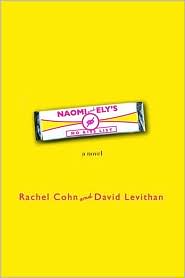 List about a year ago.
The protagonists themselves, aren't that noteworthy for their musical prowess, but the love interest of the heroine, a sexy, black man named Gabriel. He makes a carefully crafted mix for Naomi a little over halfway through the book. It's got reason and rhyme behind every song selection and the songs aren't just haphazardly shuffled together either. Gabriel recognizes that like in real estate it's all about location, location, location. There are certain songs and certain kinds of songs that just can't go together and make a good mix. There has to be flow, a continuity and unless you do so intentionally, by design, breaking that flow or tone has the potential to throw off what could be a really good mix.
You see, it's not just about having good songs. A Mix CD is like telling a story. Kind of like: http://www.plurk.com/p/q5c4c was a poem told in YouTube music videos, so is the playlist you use to make the mix the ingredients for a mix. By definition, a mix is both a singular and a plural. It is made up of many things, but is also a cohesive whole. Without some kind of structure or order, it's chaos, which doesn't make for the most enjoyable listening experience.
My friend Grace had the idea to start a WWU Mix CD Exchange Group, and we had our first meeting today. It went smoothly, as you can see in the video, and we plan to make it a weekly thing, every Thursday night at 7. I understand that not everybody shares my philosophy when it comes to making mixes, but at the same time I can respect that. It's their right to not to be so obsessive about song placement and selection.
I love the idea of this group though, because with a diverse (or large) enough group of people, chances are you'll hear something you've never heard before. And if you like it, you may even make friends with the person who's CD you end up with. The last few months, I've been all about expanding my musical horizons, especially with respect to the local scene around Seattle. That's how I've found such groups as The Senate and Dyno Jamz and Common Market. But now I don't have to go looking to find music, it will come to me.
I'm totally psyched for this to continue.
Thursday, May 7, 2009
Blip.fm
So starting back around February, my internet presence skyrocketed. This was partly due to the fact that I started talking to a very internet savvy, enthusiastic friend who introduced me to all these wonderful widgets and sites. To list off a few, I'm now on dailybooth.com, stickam.com, twitter (see feed at right), I actually use my YouTube account now; all in addition to the existing blog, facebook, emails, yahoo and plurk accounts that I had. I also picked up on some of the wonders that FireFox has to offer (seriously if you use FireFox, check out these last two links).
My favorite so far though is blip.fm. It's a site similar to twitter and plurk, only instead of simply sending an update, you search through their internet archives and select a song that will play. It can sync to your twitter account as well (I haven't yet been able to find a plurk link, darn) so your blips will be shared with more than just your listeners.
I like this. I like it a lot, because it's multimedia. As the site describes itself, you're essentially being an internet DJ for your friends. And while I'm sure there are better sites out there, with more reliable links, slightly larger databases and/or song titles actually spelled right more often, I'm more than happy to blip my way through life for now.
If you ever want to hear how I'm feeling, check out by profile, I'm DelightedDeliquescence.
Subscribe to:
Posts (Atom)